
If your SaaS website sounds exactly like your competitors, there's a good chance you're following the same copywriting advice they are.
Talk about benefits.
Lead with value.
Focus on pain points.
Differentiate yourself.
None of that advice is wrong.
It's just incomplete.
Great SaaS copy isn't created by plugging features into a formula. It's created by understanding customers, communicating outcomes, and making complex products feel obvious.
I have 11 years of experience working with over 196 SaaS brands around the world, and today I'm sharing all of my very best tips and templates!
What does a SaaS copywriter do?
A SaaS copywriter helps software companies turn more website visitors into users, usually through clear, persuasive copy on homepages, product pages, landing pages, emails, and ads. The goal is to boost free trial signups, demo bookings, or conversions from paid ads.
Copywriting is different from content writing. While content educates and builds trust over time (think blogs or ebooks), copywriting is about getting someone to take action now.
In SaaS, features matter just as much as benefits. Buyers need to understand what your tool does, how it works, and how it fits into their workflow.
That’s why a skilled SaaS copywriter doesn’t just hype outcomes. They connect the dots between what a feature does and why that matters. They make things easy to understand without oversimplifying.
The best SaaS copywriters strike a balance: they write for humans, sell the product clearly, and keep conversion top of mind.
SaaS Copywriting Strategies
Before we dive into templates and tips, let’s learn the strategies that will help you make great use of them.
1. Survey and interview your customers
I won’t beat you over the head with this. But there are several reasons why this is first on my list.
- Customers may have achieved larger, more important, more far reaching outcomes from using your product than you’re aware of
- Customers might have a very different way of speaking about your product and the industry than the words you’re using
- Customers might be getting better outcomes over some features than others--while your marketing is treating those features equally
- The list goes on.
Basically, if there is important shit in your customer’s brains, you should really get it out of there.
2. Understand JTBD (Jobs To Be Done)
JTBD is the idea that people don’t just buy products—they “hire” them to do a job. In B2B SaaS, this couldn’t be more true. Your customers aren’t buying software just for the features. They’re buying it to solve problems, hit goals, and move faster.
It’s a mindset shift: instead of focusing on what your product is or has, you focus on what it helps someone get done. This moves your copy from “Here’s what our product includes” to “Here’s how this will make your life easier.”
Think outcomes, not just tools.
Here’s a quick JTBD copywriting template to try:
“When I’m [situation], help me [job], so I can [desired outcome].”
Example:
“When I’m managing a large team and tons of moving pieces, help me stay organized, so I can deliver projects on time.”
You’re not ditching features, you’re giving them context. Features are still there, but they’re framed around what they help your users achieve. That’s how you write copy that actually connects.
3. Stick to your messaging strategy
Stick to your messaging strategy! If you don’t have one yet, no worries, item #6 below will walk you through it.
In B2B, buying decisions usually take time. Prospects might visit your site, see an ad, read a case study, join your email list, and talk to a sales rep before making a move. That’s a lot of touch points. If your message is different every time they interact with your brand, they’ll lose trust, or just tune out.
The goal is to make your message recognizable and repeatable. When people see or hear your company name, they should instantly understand who you help, what you offer, and why it matters.
To get there, you’ll need to test your messaging, do customer interviews, and see what actually resonates. Once you’ve nailed it, use it everywhere: your homepage, social, ads, email, sales decks—everywhere. Consistency builds clarity. And clarity builds conversions.
SaaS Copywriting Templates
Onto the templates! I promise to be offering more of these in the future. 😊
4. SaaS homepage template
If you know your homepage sucks but you’re not ready to hire a pro copywriter to overhaul it for you, then you should definitely grab this template. It’s more of a “themeplate” in that it doesn’t tell you exactly what to say, but rather the strategy behind what you should say. Because of this, it will actually work well for you.
Grab my SaaS copywriting templates here.
5. SaaS cold email templates
Aren’t you excited to get your hands on these? In my SaaS copywriting template pack, I’ve got a cold email that will work for you whether you sell from a demo or your product is self-serve. Plus, there’s a follow-up email too! And if you know me, then you know I have some killer cold email subject lines in there. My ultimate subject line trick? Make them as short and simple as possible, no unique selling propositions allowed.
6. SaaS messaging strategy template
Yes, you really do need to have a set-in-stone messaging strategy. What are you saying and to who? How are you saying it?
Consistency is important, especially in B2B. Check out this SaaS messaging strategy tutorial I made last year and the template that goes with it.
SaaS Copywriting Tips
7. Use trusted headline formulas
Joanna Wiebe, the wonderful human who coined the phrase “conversion copywriter,” has done the time-intensive work of putting every copywriting formula known to man in one article. This beast has an estimated read-time of 59 minutes.
Not to worry. It is easily navigable!
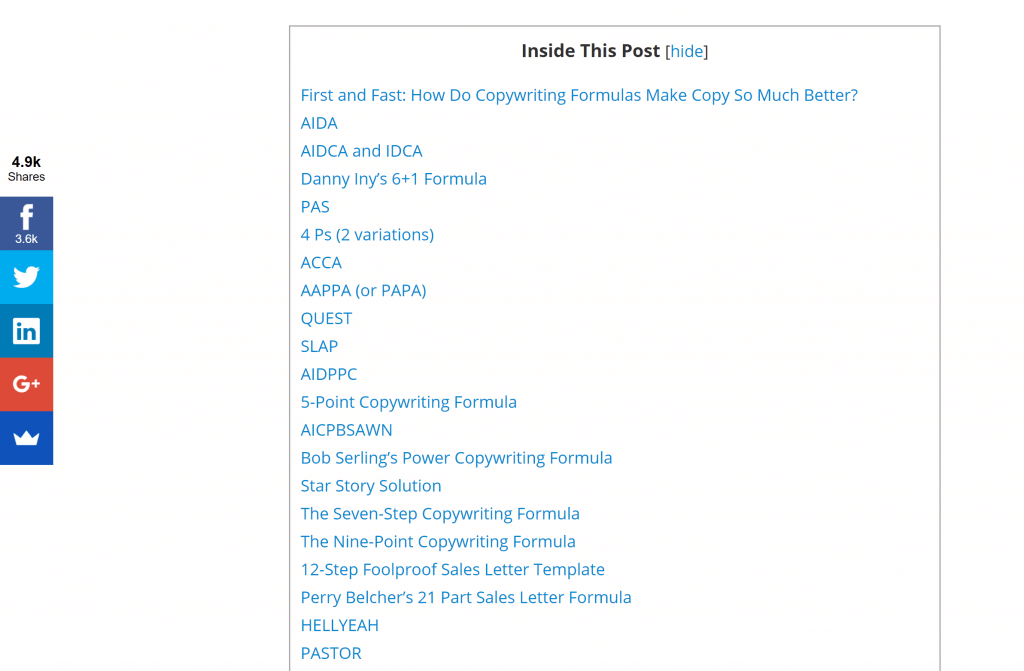
Do yourself a favor and check all of them out.
Particularly for page headings and subheadings, email subjects lines and ad copy, these formulas will reduce your staring-at-screen-time by well over half.
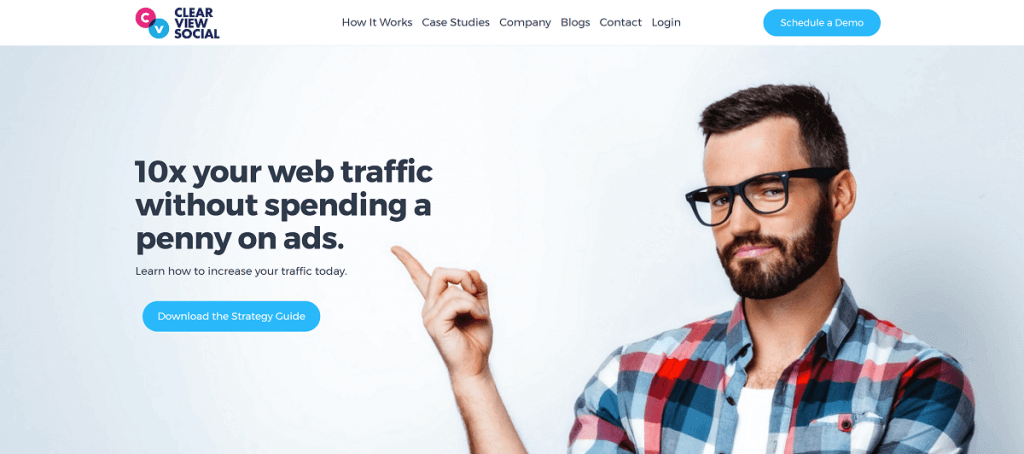
One of the more well-known copywriting formulas is this one: [Get desired outcome] without [core objection or fear].
Here’s an example of this at work in a platform for employee advocacy, Clearview Social.
8. Be creative in headlines and crystal clear in subheadlines and body copy
Confession: I also write fantasy.
My fiction writing helps keep my creating juices alive and flowing. (Pretend I didn’t just say that.)
Being creative is super important in copywriting, because it gives you the ability to shock people out of their stupor. Let’s be honest. In order to sell things, you first have to get someone’s attention. Creative turns of phrases can help a lot.
However, you never want creativity to stomp all over clarity.
Big no no.
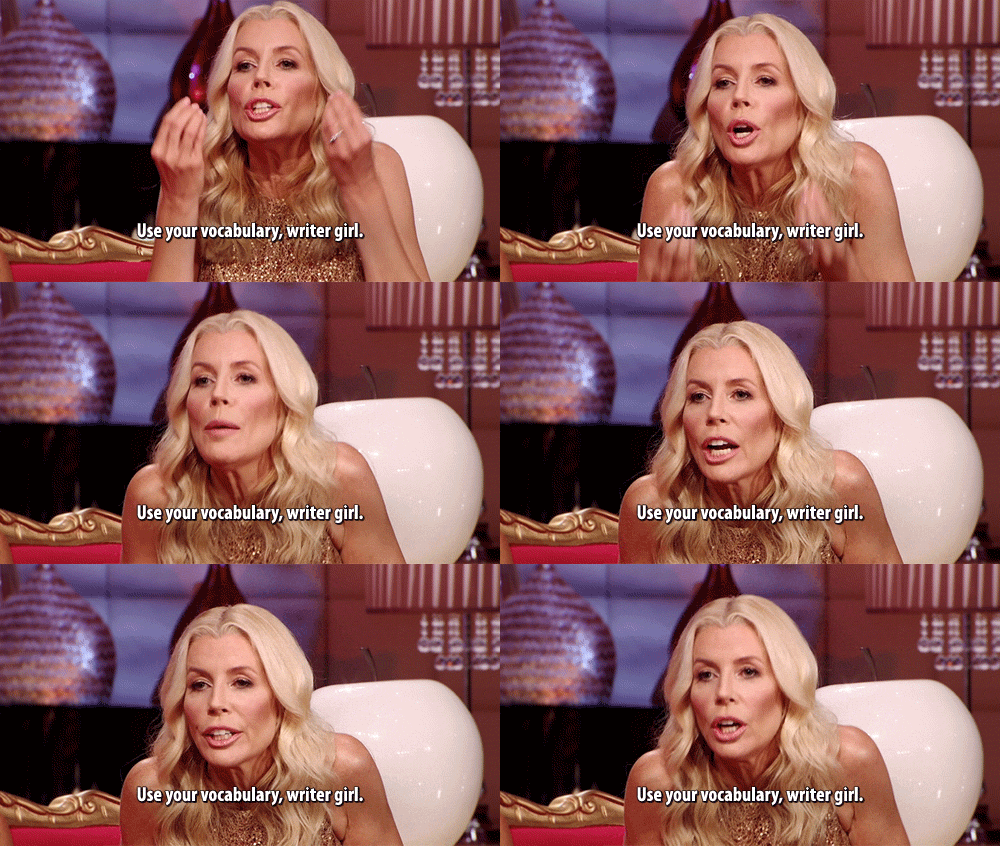
A good rule of thumb is to write creative, unique, shocking, hook-worth headlines, and then follow up with a very clear subheadline to explain the main value proposition and outcome.
9. Define a brand voice early on
It might not seem like a top priority when you’re hustling through the early stages of building your SaaS company, but defining your brand voice early is one of the smartest things you can do.
Your brand voice is how your company “sounds” to the outside world—and it does a lot of heavy lifting:
Personifies your brand and gives it a clear identity
Helps new prospects instantly relate to your product and team
Strengthens the emotional connection with current customers
Builds trust, loyalty, and long-term stickiness
A strong voice makes your copy feel human, your content more engaging, and your product more memorable. Without one, you risk sounding generic and forgettable, especially in crowded markets.
I like to think of brand voice like a character. Imagine how they talk, how they walk, what they wear. Then bring that energy into your emails, landing pages, ads, and support messages.
At a more foundational level, however, you should consider developing a brand guide (even a short one) ASAP.
10. Lead with outcomes
You can talk about features and benefits until you’re blue in the face, but if your prospect doesn’t clearly understand the outcome—what they’ll get by using your product—it won’t stick.
Outcomes are what drive action. They tap into your customer’s goals, frustrations, and bigger-picture needs. When your copy makes the outcome obvious and desirable, people are far more likely to sign up, book a demo, or take the next step.
A clear outcome turns “This product does XYZ” into “Here’s how your life gets better.” It answers the unspoken question in every buyer’s mind: What’s in it for me?
You’ll see an immediate difference when you shift your copy to highlight outcomes. See for yourself in this before-and-after example:
Why do outcomes work so well? Because people buy results. They have jobs to do, goals to reach, and problems to solve. Outcomes are the end of the story—and your product is the vehicle that gets them there.
When you write with outcomes in mind, you’re not just describing a product. You’re positioning your solution as the bridge between where they are now and where they want to be. That’s powerful.
Having a clear outcomes in your copy makes an immediate difference. See for yourself in this before & after example:
11. Make your most important features impossible to miss
In SaaS copywriting, there is a conundrum.
Every copywriter has heard the advice: "Sell benefits, not features."
And yet, every single person reading this article has evaluated a software product based on its features at some point.
That's because SaaS buyers don't just want to know what outcome they'll get. They also want to know how they'll get it.
So let me shout this from the rooftops:
Selling benefits does not mean hiding your features.
In fact, one of the biggest mistakes I see SaaS companies make is treating every feature equally. They create giant feature grids where everything gets the same amount of space, attention, and copy.
But not all features are created equal.
Most products have one or two features that make prospects think, "Yep, that's exactly what I need." Those are the features you should prioritize in your messaging and design.
Give them more space. Explain them more clearly. Connect them directly to an outcome.
A simple way to do this is with feature-focused headlines like:
- [Feature] so you can [Outcome]
- [Feature] that [Value Proposition]
- [Feature] to help you [Outcome]
For example, instead of:
Automated Reporting
Try:
Automated reporting so you can stop wasting hours building spreadsheets
Notice that the feature is still there. It's just tied to a result the customer actually cares about.
Once you've highlighted your most important features, don't be afraid to get a little technical. Buyers need enough information to understand whether your product fits their needs. Just make sure you're explaining features in the context of the outcome they create.
The best SaaS copy doesn't force customers to choose between features and benefits.
It shows them how the features create the benefits in the first place.
I talk about this more in my template pack. Grab my SaaS copywriting templates now.
12. Tie CTAs to an outcome after the action
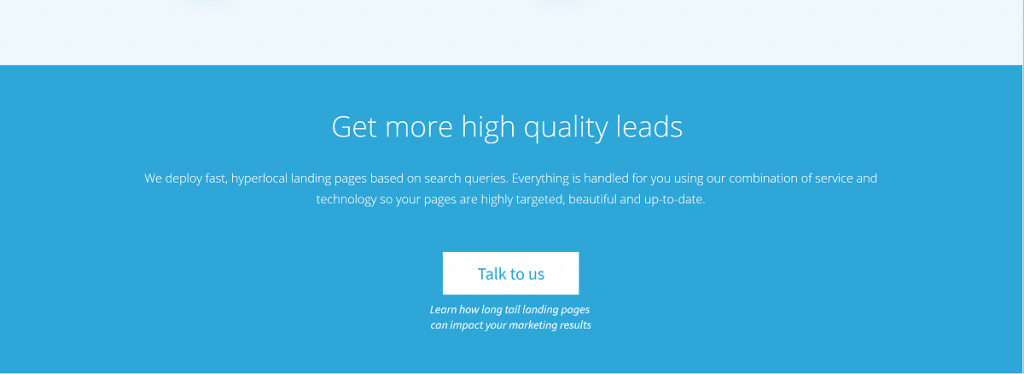
A CTA isn’t just the button—it’s the surrounding copy too. The text above and below can boost clarity and motivation. Instead of “Schedule a demo,” try adding what the user will learn or achieve. Less isn’t always more here. In this example I wrote (see below), I added a simple outcome to show what the prospect gets out of the demo. It’s a small tweak that can make a big difference.
13. Dimensionalize the benefits
If you really want to make your copy so compelling that your target customers can't help but give you their money, then you need to dimensionalize the benefits.
Eddie Shleyner of VeryGoodCopy does a great job of explaining what this copywriting tactic looks like in this LinkedIn post.
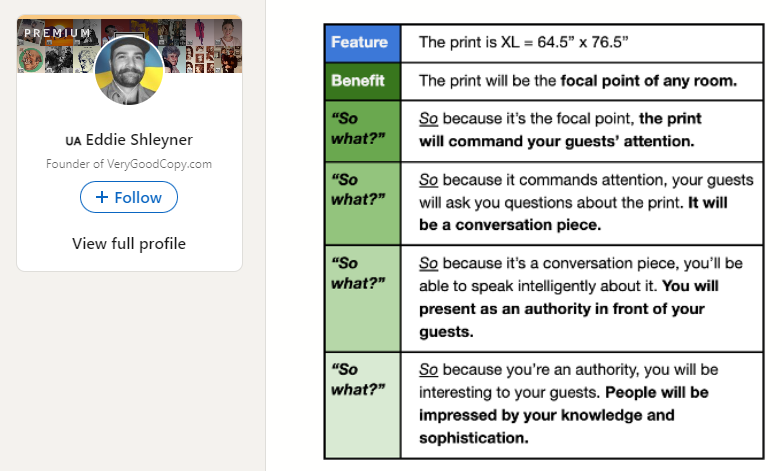
Essentially, you need to always be asking "so what?" when you come up with benefits.
The person will save time. So what? They'll be able to spend more time with their kids.
Or, the person will get a task done at work. So what? They'll be able to impress their boss. So what? They'll keep their job.
By asking yourself "so what?" you can take the benefits in your copy to the next level.
14. Challenge yourself to work within character limits
In the world of SaaS copywriting, every character counts. Working within character limits is not just a skill, it's a competitive advantage. Copy should be concise.
Setting character limits encourages copywriters to prioritize key information and benefits, ensuring that every word serves a purpose. So, try setting character or word limits for each headline and description before you write it. Do your best to stick to them. This demands more precision and creativity. You'll be forced to distill ideas down and keep things focused on what really matters to the customer.
As you gain experience, it'll be easier to work within character or word limits, and you'll find yourself naturally aiming to be more concise.
SaaS AI-Copywriting Best Practices
Since around 2022, AI-driven copywriting has been very popular in the SaaS world. Afterall, we're in the tech industry. It would only make sense that we would utilize artificial intelligence to write copy better and faster.
AI-powered copy can be a bust or a boon. It all depends on how you use it.
Below, I share my absolute best tips for writing copy assisted by AI.
15. Use simple voice and tone descriptions
The more complicated your style requirements, the worse your copy will sound. If you want ChatGPT or Claude to write easy-to-read, human-sounding content, you need to give it easy-to-read, human-sounding instructions.
I've tried so many different prompts to get ChatGPT to write in a way that doesn't sound like a computer, and many of those prompts have failed.
I finally stumbled on the style instruction that works, and I'm going to share it with you:
The most important thing is for the content to be easy to read and personable. Our audience is small to medium businesses, so we don't use jargon. But still write professionally.
The reason this works is that I'm telling the generative AI that I care about readability over everything else. Also, the word "personable" goes a long way towards getting AI to write like a human. And lastly, the request to not use jargon but still write professionally, helps the AI to balance informality with formality. Try this yourself and be amazed!
Of course, for some clients, that voice style doesn't quite fit, but as a general rule, I'm able to produce much better copy every time I enter that prompt.
16. Write one section at a time
When you ask ChatGPT to write an entire blog post or landing page in one go, the output tends to be generic, redundant, and templated. But when you focus on just one section at a time, you can steer the AI toward more on-brand language.
What I usually do is write the outline first, then go section by section. I give ChatGPT the heading, a short sentence about what I want it to say, and the style prompt. The copy turns out way stronger, way more aligned with the client’s brand, and way more interesting to read.
17. Use real writing samples to train AI on brand voice
One of the most effective things I do when writing with ChatGPT is give it a paragraph of on-brand copy before I even ask for anything. Then I ask ChatGPT to match that tone and sentence structure moving forward.
This is an alternative method to the style prompt mentioned above. This works great if the brand has a very specific rhythm and style that you need to follow.
Here’s what I’ll typically do:
Paste a short writing sample (around 120–150 words)
Ask ChatGPT to analyze it for voice, tone, and structure
Then ask it to write the next section “in the same style as above”
You can also ask it to reword a new section in that same style if it goes off track. This technique works for longform blog posts, ebooks, landing pages—pretty much anything where tone matters.
Treat the writing sample like your style bible, and the results will be 10x more aligned with the brand.
The final word
There’s still a lot of bad B2B SaaS copy out there. It focuses too much on features and the “stuff.” Yes, we need to understand the features, but we also need to know the problem, the result, the audience, etc.
And words are words, so no matter how great they are, they still need to be short and sweet. No matter how many advanced SaaS copywriting strategies you employ, you still need to stick within character limits.
Unfortunately for my bank account, I don’t have time to rewrite all of the bad copy plaguing the SaaS industry. Hopefully these tips, templates and strategies can help you help me make it better. Thanks for reading!
Frequently asked questions
What’s the difference between SaaS copywriting and SaaS content writing?
SaaS copywriting is all about conversions and getting people to take action, like signing up for a trial or booking a demo. Content writing is more about education and trust-building through blog posts, guides, and resources, often with a great focus on SEO. Both are important, but copywriting is where you go hard on persuasion, clarity, and positioning. It’s selling, not storytelling (but sometimes both).
How do I know if my SaaS company needs a professional copywriter?
If your homepage isn’t converting, your product pages feel flat, or your messaging is all over the place, it’s time. A pro copywriter can help clarify your value prop, sharpen your CTAs, and actually get people to take action—not just admire your design. Results > vibes.
Should I focus on features or benefits in my SaaS website copy?
In most industries, you can focus almost entirely on benefits. But in SaaS, especially B2B and enterprise, buyers need more. They want to clearly vet features to make sure your product checks the right boxes. That’s why you need both. On your homepage, lead with benefits. On your product and feature pages, highlight what the tool does, but do it in a way that shows the value behind each feature. Think outcomes, not specs.
What’s the best way to test and improve SaaS copy for conversions?
If you’ve got the traffic, A/B testing is gold. But if you don’t, get feedback on key pages. Ask customers what made them sign up, what confused them, or what almost stopped them. Look for patterns in live chat convos, support tickets, and sales calls. Great copy comes from real voices, not guesswork. Listen first, write second.
How can I make my SaaS homepage copy stand out from competitors?
Start with a strong point of view. Don’t just describe what your product does, clarify who it’s for, what problem it solves, and why that matters. Use customer language, not tech jargon. Lead with an outcome, back it up with proof, and keep things skimmable. Most SaaS homepages sound the same. Yours should feel like a real conversation.
What should I include on a SaaS landing page?
Start with a clear headline that speaks to the outcome. Follow with 1–3 key benefits, a short features section, social proof, and a CTA that tells people what they’ll get. Keep the layout simple and conversion-focused. If you’re not sure what’s working, ask your customers. No traffic? No problem. Feedback beats guessing every single time.
How can I improve my SaaS copywriting skills?
Create a swipe file with copy that grabs your attention and analyze why it works. Use proven templates to guide your structure, but don’t forget to make it your own. Do deep customer research and write like you’re talking to one person. Focus on specific problems and clear outcomes, not vague fluff. Add social proof to build trust. The more you write, test, and tweak, the better you’ll get.
Looking for a SaaS copywriter? Learn more about my services.